How To Make Driving Easier
For many people, particularly learners, the prospect of parallel parking on a busy street seems daunting. Additionally, backing into tight spots induces the same level of stress, if not more. Moreover, with the rise of larger vehicles like SUVs, the thickening of cars’ roof pillars has only worsened the problem. That’s why the introduction of parking sensors has been a godsend. These tiny technological gadgets beep, flash, and warn drivers when they are about to make a costly mistake.
Furthermore, these systems have evolved from luxury add-ons to near-standard equipment on modern vehicles. Customers today expect companies to include them as standard equipment. Moreover, they have made life easier for drivers of all ages. However, many still do not know how they actually work. Though it may seem fruitless, understanding the technology behind the beeps helps drivers appreciate their value. Not only that, but it also helps choose the right system and maintain it properly for years of reliable service.
How Do They Work
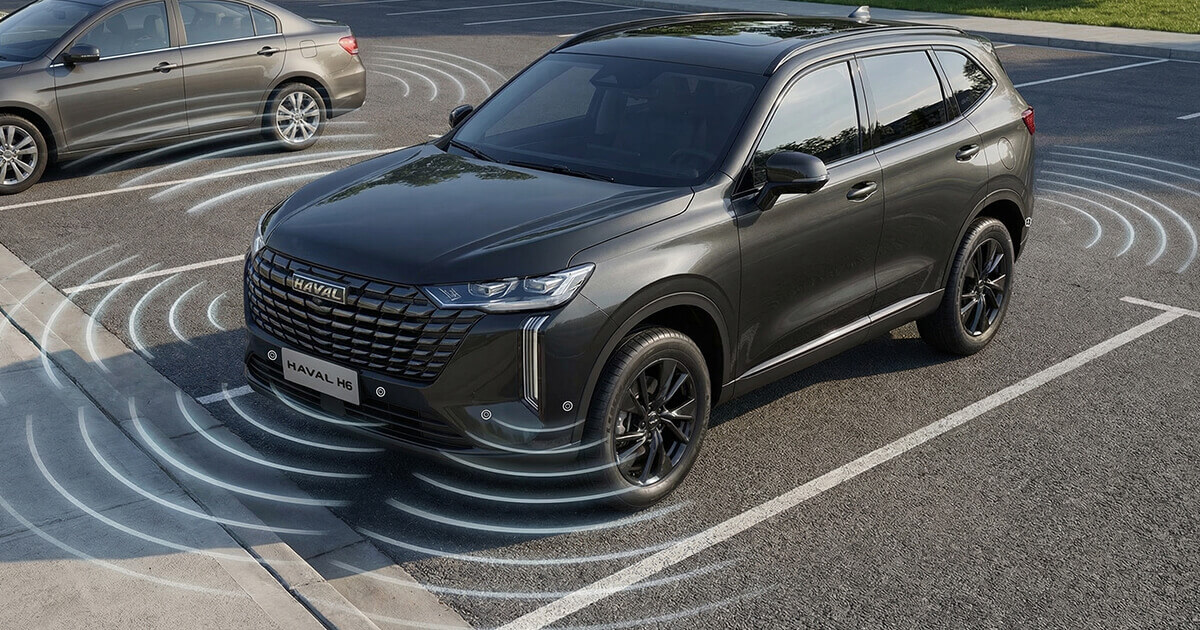
First, let’s begin by understanding the mechanism at work. At its core, the idea of park sensors revolves around detecting an object without touching it. A clever use of physics and engineering enables a sensor to operate on one of two principles: reflecting sound waves or reflecting electromagnetic waves.
The Basic Principle: Regardless of the technology and car model, all systems share a common workflow. This includes the following:
- Emission: A sensor mounted on the bumper emits a signal (either sound or electromagnetic waves).
- Reflection: If an object is within range, that signal bounces off it and returns to the sensor.
- Calculation: The system’s electronic control unit measures the time it took for the signal to return. Using the speed of sound or light, it calculates the distance to the object.
- Alert: The system alerts the driver, typically with an audible beep that increases in frequency as the object gets closer. Moreover, it is often accompanied by visual cues on a dashboard display. When the object is critically close, the beep often becomes a continuous tone.
If this is not impressive enough, it is worth mentioning that all this takes place in milliseconds. Hence, providing real-time feedback for drivers to manuever their vehicles.
Ultrasonic Sensors For Modern Vehicles
The most common technology found in aftermarket kits and standard factory installations is the ultrasonic sensor for a vehicle’s system. It is quite likely that people have seen but are unable to recall. That is not surprising given that it is a small, round, button-like device embedded in the bumpers of countless vehicles.
How It Works
Ultrasonic sensors operate on a principle similar to sonar. A technique used by animals like bats and dolphins for navigation. They emit high-frequency sound waves that are well above the range of human hearing (typically around 40 to 48 kHz). Then, these sound waves travel through the air until they hit an object. At which point they bounce back to the sensor as an echo.
Next, the sensor’s internal transducer acts as both a speaker and a microphone. It sends out a pulse of sound and then listens for its return. Then, the system’s computer calculates the time difference between emission and reception. Additionally, the speed of sound in air is constant at approximately 343 meters per second. Hence, the distance to the object can be calculated with impressive accuracy.
Ultrasonic sensors are incredibly effective at short ranges, which is exactly what drivers need. Moreover, they are typically designed to detect objects within a range of about 0.2 to 2.5 meters. Thereby, making them perfect for judging the final few feet of a reversing maneuver. Since they use sound, they are reliable regardless of the object’s color or transparency. However, their performance can be affected by environmental factors like heavy rain, snow, or mud. Then it may absorb or deflect the sound waves.
The Types
Now that we know what they are, let’s look at different types of this feature. They generally fall into two main categories based on their location and function.
- Rear: Inarguably, it is the most common type and the first aid a driver experiences. Mounted on the rear bumper, they activate automatically when the vehicle is put into reverse gear. Additionally, its primary job is to prevent collisions with low objects, walls, poles, or other cars when backing out. Furthermore, its beeping alerts the driver to obstacles that are invisible in the rearview mirror or over the shoulder.
- Front: The automotive landscape has changed significantly over the past few decades. Vehicles today are taller, and the hood lines have risen as well. Hence, the front of the vehicle has become a significant blind spot. To remedy this shortcoming, these modern features are installed in such vehicles. Mounted on the front bumper, they are typically activated manually by a button or automatically at very low speeds. Thereby, assisting drivers – particularly new ones. Additionally, they help pull into a tight garage, nose into a parallel spot, or manoeuvre in a crowded space. The latter poses the risk of a low bollard or curb that might be hidden from the driver’s view.
- Electromagnetic: Though the ultrasonic sensor has dominated the market, an alternative technology exists as well. Often found in aftermarket kits, the electromagnetic version works differently. Also known as a passive or inductive sensor, it disturbs the field when an object enters it. That said, this only happens when the object is conductive, such as a metal car or pole. If detected, the system triggers an alert.
The major advantage of this system is that it requires drilling no holes in the bumper. The sensor strip is simply mounted on the inside surface of the bumper cover. Thereby, making it effectively invisible. However, a significant drawback is that it may not reliably detect non-metallic objects. These include concrete walls, plastic bollards, or wooden fence posts.
Conclusion
Overall, parking sensors have become a staple in the automotive industry. In the coming years, new drivers will find it hard to imagine a world without parking sensors.
Frequently Asked Questions
Parking sensors emit a signal (ultrasonic sound waves or electromagnetic fields) from sensors in the bumper. When the signal hits an object, it reflects. The system calculates the distance based on the return time and alerts the driver with beeps or visual cues
It is a device that uses high-frequency sound waves to detect obstacles. Moreover, it acts as both a speaker and a microphone. Hence, sending out a pulse and listening for its echo to measure the distance to nearby objects.
The main types of parking sensors are ultrasonic sensors, which use sound waves and are the most common. Also, the electromagnetic sensors create an electromagnetic field and detect disturbances. Location: rear and front sensors also categorise them.
They enhance safety by preventing collisions, reducing driver stress during parking, and protecting a vehicle’s resale value. Furthermore, it provides valuable assistance for drivers of large vehicles or those with limited mobility.
Yes, aftermarket parking sensors kit are widely available and can be installed on virtually any car. Additionally, ultrasonic kits require drilling holes in the bumper. Meanwhile, electromagnetic kits offer a no-drill installation option.