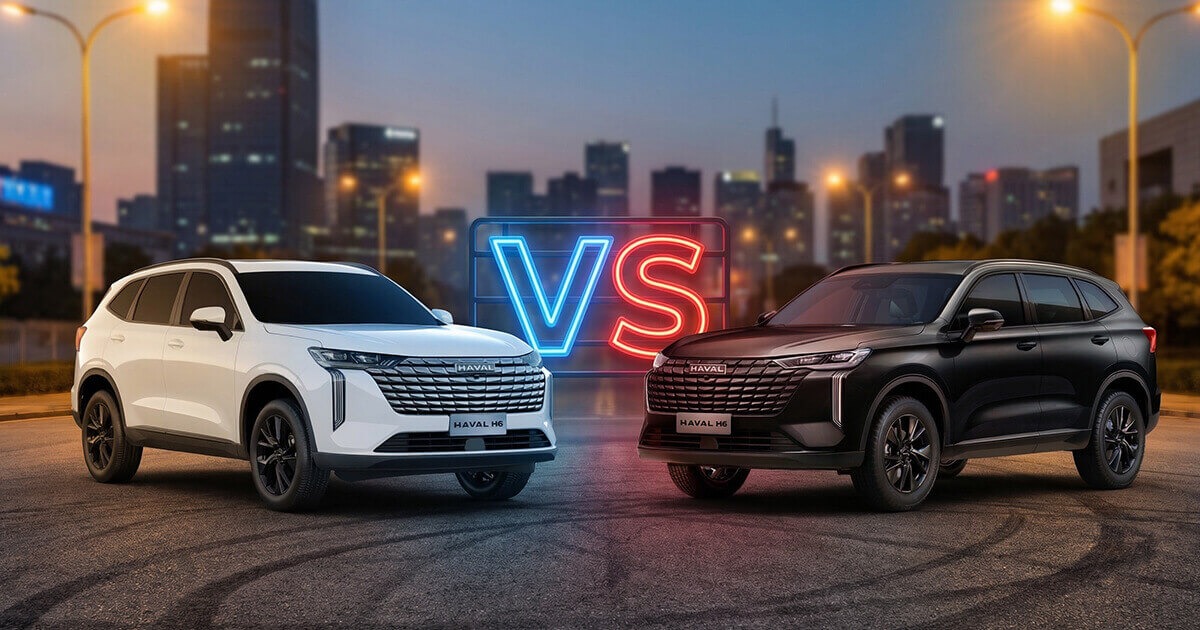
The Hybrid vs Plug-in Hybrid Debate
No industry has taken a more significant step towards a greener future than the automotive industry. Every development aims to be more eco-friendly than its predecessor. Moreover, these cars come with an expanding array of powertrain options. Traditionally, consumers had a straightforward decision between petrol and diesel vehicles. However, today, the choice is not as simple as before. Now, hybrids and plug-in hybrids (PHEVs) dominate showroom floors. Furthermore, they serve as a bridge between combustion engines of the past and electric vehicles of the future. Yet this raises a controversial question: Which is the better choice?
Although they sound similar and both promise better fuel efficiency, they are quite different. In other words, these two types of vehicles operate on fundamentally different principles. That’s why understanding the distinction between them is crucial to making a smart purchase decision. Furthermore, it helps you understand the hybrid vs plug-in hybrid debate.
How Hybrids Work
To understand both sides of the hybrid vs plug-in hybrid debate, it’s first important to understand how the former works. Simply put, a standard hybrid electric vehicle (HEV) combines a gasoline internal combustion engine with one or more electric motors. Additionally, its two power sources work in tandem to propel the car. Hence, the system automatically switches between them or combines them for maximum efficiency.
However, the magic of hybrids lies in their self-sustaining nature. The battery recharges through two methods: regenerative braking and the gasoline engine. The former captures energy that is normally lost during deceleration. Meanwhile, the latter acts as a generator itself. Hence, you never have to plug in a traditional hybrid. Simply fill it up with petrol like any other, whilst the hybrids handle the rest behind the scenes.
Traditional hybrids operate on a parallel system. Here, the engine and electric motor can both drive the wheels directly. At low speeds or on lightly trafficked roads, these vehicles operate on electric power alone for short distances. Alternatively, under hard acceleration, both power sources combine forces. Thereby, the gasoline engine takes over as the primary motivator at highway speeds.
How Plug-Ins Differ
In the hybrid vs plug-in hybrid debate, the latter starts with the same basic concept—a gasoline engine paired with an electric motor. However, there is a critical twist. A much larger battery that can be charged from an external power source is used. Though it may seem too simple, this drastically transforms the ownership experience.
The traditional hybrids might have a battery capacity of 1 to 2 kWh. Meanwhile, plug-ins typically pack a battery ranging from 10 to 20 kWh or more. Consequently, the larger battery enables something that standard hybrids cannot offer: a meaningful all-electric driving range. Furthermore, most PHEVs can travel between 15 and 50 miles on electricity alone. Not only that, but more recent models exceed 90 miles of EV range.
Having said that, when the battery’s depleted, the gasoline engine seamlessly takes over, and the vehicle operates like traditional hybrids. Hence, it eliminates the ‘range anxiety’ associated with pure electric vehicles. This makes PHEVs an attractive option for those who want to reduce their fuel consumption. That too, without changing their long-distance driving habits.
Hybrid vs Plug-In Hybrid Differences
Now that we know what they are, let’s look at how they differ from one another.
- Charging Requirements: Inarguably, the most fundamental difference between the two remains the charging. Standard hybrids never need to be plugged in. Rather, they are self-charging. Using regenerative braking and an engine, they replenish the battery when required. On the other hand, plug-ins must be charged to realise their full fuel-saving potential. Moreover, it is possible to charge them using a standard household 120-volt outlet – though it would be a slow process. Alternatively, a 240-volt Level 2 charger helps replenish the battery faster. Lastly, some newer PHEVs offer DC fast charging. These can recharge the battery by 30% to 80% in as little as 19 minutes.
- Battery Size and Electric Range: Since PHEVs have larger batteries, they offer substantially more electric-only driving capability. Alternatively, standard hybrids’ electric motor’s design primarily assists the engine. Additionally, it may only power the engine for a mile or two at low speeds. On the contrary, PHEVs can typically travel 20 to 50 miles on electricity alone. Moreover, some models achieve over 90 miles of EV range. This difference shows the contrast between electric assistance and true electric driving.
- Fuel Efficiency and Emissions: When driven within their electric range and charged regularly, PHEVs offer dramatically lower fuel consumption and tailpipe emissions than standard hybrids. Moreover, the U.S Department of Energy estimates the annual fee cost of such vehicles to range from $1,000 to $2,000. This is relatively low compared to the $2000 to $7,000 cost range for traditional hybrids. However, if the former is never charged, it will actually be less efficient than its counterpart. That is because it carries the extra weight of a larger battery without utilizing its benefits.
- Upfront Cost: Lastly, PHEVs are consistently more expensive than their traditional counterparts. The larger battery, more powerful electric motor, and charging hardware add a thousand to its price tag. However, the higher upfront cost is partially offset by its low running cost. Thus, making the vehicle worth it in the long run. Additionally, some countries offer incentives to use such vehicles to meet their carbon footprint targets.
The Right Decision Between Hybrid vs Plug-in Hybrid
The debate surrounding hybrid and plug-in hybrid ultimately comes down to three factors: the driving patterns, access to charging, and budget.
If you have a short daily commute, a place to charge at home or work, and the budget for a higher upfront investment, PHEVs work better. They offer the maximum fuel savings and the lowest emissions.
On the other hand, if you lack convenient charging and take frequent, long trips, traditional hybrids are the right answer. They offer the most straightforward path to better fuel economy.
Conclusion
All in all, the hybrid vs plug-in hybrid debate will likely rage on for a while. However, what is exciting to see is the rapid advancement in the automotive industry. It is quite likely that over time, more advanced vehicles will be introduced that render both of them obsolete. Yet, the general customers will be better off.
Frequently Asked Questions
Hybrid cars combine a gasoline engine with an electric motor. Moreover, the system automatically switches between or combines these power sources for maximum efficiency. Additionally, the battery recharges through regenerative braking and the engine itself. Hence, no plug-in is required.
For standard hybrids, the battery range is not measured in miles. That is because the battery assists the engine rather than powering the car alone for long distances. Instead, these cars achieve total driving ranges of 500-600+ miles on a tank of gas.
They include excellent fuel economy – especially in city driving – and no charging requirement. Additionally, it offers proven reliability, lower maintenance costs due to reduced engine wear, and longer brake life from regenerative braking. Furthermore, it significantly lowers emissions compared to conventional vehicles.
They are better for drivers who charge regularly and stay within electric range most days. That is because they offer maximum fuel savings and minimal emissions. Meanwhile, standard hybrids are better for those without access to charging. Also, those who want maximum simplicity with excellent efficiency find this more suitable. However, there is no universal better.