Importance of Understanding the Difference Between Cruise Control And Adaptive Cruise Control
For decades, people would hesitate to drive for long hours because of the fatigue it caused. The main reason behind it was the need to maintain a steady speed on the highway. Consequently, a driver’s right foot would feel sore after a long journey, in the best-case scenario. Gradually, manufacturers recognised these limitations and began addressing them. Hence, the cruise control feature was introduced.
A technology that made life easier for drivers all around the world. However, technological innovations in the automotive industry accelerated over time. As a result, a new player enters the scene: adaptive cruise control. While they have the same name and purpose, the difference between cruise control and adaptive cruise control is profound.
Difference Between Cruise Control And Adaptive Cruise Control 101
Many drivers feel that features like these are too technical and thus not worth their time. This is a grave error on their part. Understanding the distinction between the helps them make informed decisions regarding purchase and maintenance.
On the one hand, it is a simple convenience feature. On the other hand, a sophisticated piece of safety and driver-assistance technology that brings us one step closer to autonomous driving. Hence, knowing about them helps drivers and enthusiasts in more ways than one.
What is It?
To understand the difference between cruise control and adaptive cruise control, we need to know what each one entails. Let’s begin with the former. Also known as speed control, it is a device installed in a vehicle that automatically maintains a set pace. Moreover, the driver sets a desired momentum, and the system takes over. It keeps the accelerator pedal depressed to maintain that rate exactly.
Furthermore, it has been a staple in automobiles for decades. Additionally, it was designed to offer multiple benefits to drivers. These include relieving driver fatigue on long, straight roads and highway journeys. Also, allowing the driver to take their foot off the accelerator provides comfort. Lastly, it helps them avoid speeding tickets by staying within the legal limit without constant monitoring.
How It Works
Though it may seem confusing at first, the mechanics behind them are simple once people understand what’s happening. In essence, it uses a clever combination of sensors and actuators. This system’s brain is a small computer. It is typically located under the hood or behind the dashboard. Additionally, it connects to several key components:
- Speed Sensor: This sensor, often a wheel sensor, constantly monitors the vehicle’s pace. Then, it sends this data to the computer, which propels the system.
- Throttle Actuator: This is the muscle of the operation. When the driver sets a pace, the computer compares it to the actual rate. If the car is going too slow (e.g., uphill), the computer signals the actuator to open the throttle further. Alternatively, if it’s going too fast (e.g., downhill), it signals to close the throttle. Furthermore, in modern cars with drive-by-wire systems, all of this is handled electronically.
- Driver Controls: These are the buttons the driver uses to interact with the system. Typically, they include:
- ON/OFF: Activates the system.
- SET: Tells the car to hold the current rate.
- RES (Resume): Instructs the car to accelerate back to the previously set pace after being disengaged.
- CANCEL: Temporarily turns off the feature.
- + / – : Allows the driver to increase or decrease the set momentum in small increments.
What is It Called Adaptive?
On the other hand is the Adaptive Cruise Control (ACC). It is sometimes referred to as an auto or autonomous controlling feature. Deemed a significant technological leap forward, it builds upon the foundation of the traditional system’s legacy. It adds an extra layer of intelligence and awareness to its system.
As its name suggests, ACC is adaptive. It does not just blindly maintain a set pace. On the contrary, it actively monitors the road ahead, detects other vehicles, and automatically adjusts the car’s momentum. Thus, maintaining a safe following distance. Moreover, it’s a core component of what makes a car a “Level 1” autonomous vehicle, as defined by SAE International.
How It Works
The ACC relies on a set of advanced sensors. They perceive the world around the car. Furthermore, these sensors are typically mounted behind the front grille or bumper. They include radar, laser (lidar), or cameras. The system works in two primary modes:
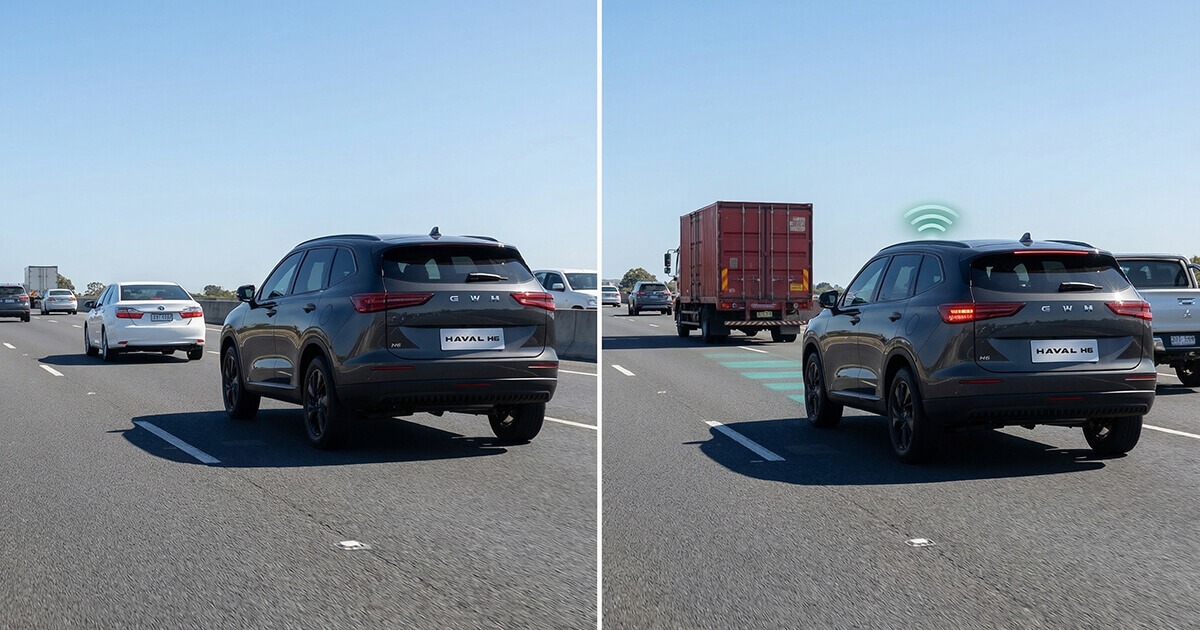
- Cruise Mode: When the road ahead is clear and there are no vehicles in front, ACC functions just like the standard version. Thereby maintaining the driver’s set pace.
- Follow Mode: When a vehicle is detected ahead, the system switches to headway-control mode. It calculates the distance to that vehicle and the car’s rate relative to it. Then, it automatically adjusts the throttle and, crucially, can even apply the brakes to maintain a pre-selected time gap. These gaps include the two-second following distance.
Furthermore, basic ACC systems function only above a certain momentum. That is typically around 20-25 mph. Additionally, it will disengage (or even cancel) at lower paces. However, more advanced features, such as Full-Speed Range ACC systems, also work in stop-and-go traffic. These systems assist in bringing a car to a complete halt behind a stopped vehicle. Then, it resumes moving when the traffic starts to follow. This feature is often called the Traffic Jam Assist.
Limitations of ACC
Though incredibly impressive, the ACC does have certain limitations. Drivers need to understand that it is a convenience system, not a safety or collision-avoidance one. Additionally, it faces the following shortcomings:
- May not detect stationary vehicles or objects.
- Struggles in poor weather, such as heavy rain or snow.
- It may not detect small vehicles, such as motorcycles and bicycles.
- Its braking power is often limited, often about 40% of the car’s full braking capacity. Meaning a driver must intervene for emergency stops.
- Drivers must remain attentive and ready to take over at any moment.
Conclusion
All in all, the difference between cruise control and adaptive cruise control is apparent. The latter builds upon the foundation set by its predecessor. Furthermore, companies will likely introduce even more impressive features over time. The pace at which the automotive industry is evolving is astounding to witness today.
Frequently Asked Questions (FAQs)
It is an in-car system that automatically maintains a pace set by the driver. Hence, allowing them to take their foot off the accelerator pedal.
It uses a small computer to compare the vehicle’s actual pace (from a wheel sensor) with the driver’s set rate. Then, it sends signals to a throttle actuator to adjust the engine’s power up or down to maintain the desired momentum.
Yes, it can automatically apply the brakes to slow the vehicle. Thereby, maintain a safe distance from the car ahead. When it does so, the brake lights come on to warn drivers behind.
It is a general term often used interchangeably with “adaptive cruise control” (ACC). It refers to a more advanced system that maintains a set speed and automatically adjusts the speed. Thus, keeping a safe distance from vehicles in front.
The core difference is awareness. The standard versions is technically blind and only cares about maintaining its set speed. Meanwhile, the adaptive one is aware of traffic ahead. Consequently, it actively manages speed, including braking, to maintain a safe following distance.